
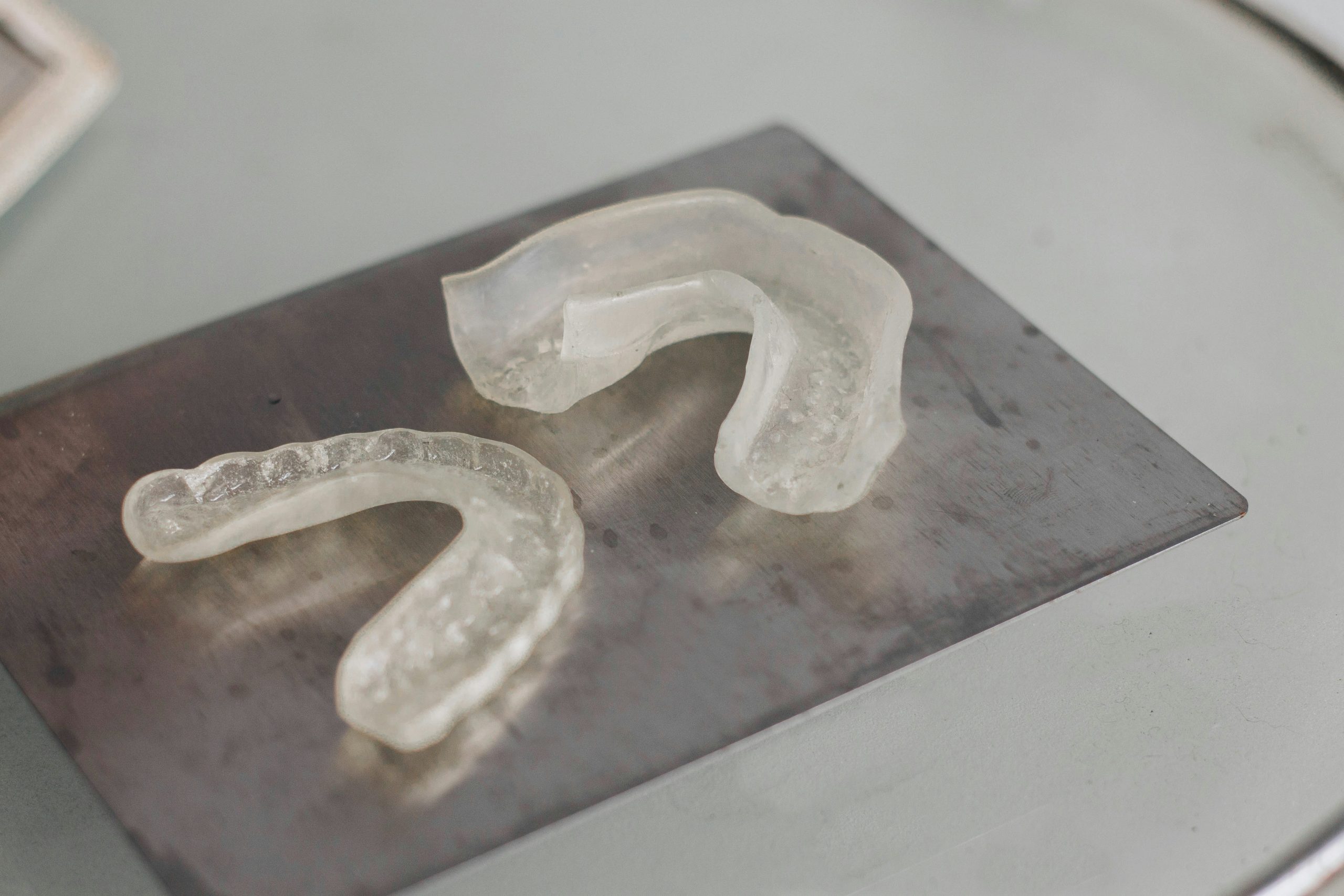
It is important to give our teeth maximum protection when they need it, as enamel cannot be replaced naturally. Most people are already aware that, when playing a contact sport, the athletes need to wear a mouthguard. However, not many people realize that mouthguards can also protect the teeth at night. Bruxism is a condition in which an individual grinds their teeth, and this condition can be difficult to stop during sleep. To prevent damage to the teeth during the night, My Dentist Friend offers custom-fit mouthguards to protect bruxism sufferers’ teeth from damage.
book onlineWhy Are Mouthguards Necessary?
Patients may find themselves waking up from jaw pain. Alternately, a partner might inform a patient that they hear grinding during the night. Bruxism can affect our patients’ sleep, meaning that they have less energy during the day. Not only are there these noticeable symptoms, which also include headaches and fatigue, but our patients’ teeth will also become increasingly damaged. A custom-fit mouthguard alleviates the pain, allowing our patients to have a good night’s sleep and prevent damaging their enamel.
Mouthguards are worn during the night, which allows the rubber of the mouthguard to take the impact of the teeth grinding instead of the opposing dental arches. Mouthguards will need to be replaced once they are worn down thoroughly. Alongside the mouthguard, our Dentists also may ask our patients to make some changes to their diet or medication if our Dentists thinks this could be affecting the bruxism condition. However, mouthguards are more effective, as diet and medication are not necessarily the cause. NTIs, which are a type of splint, are a small plastic device that sits on either the upper of lower jaw to prevent the dental arches from touching during sleep. It is another possible solution for bruxism, but NTIs do not offer the same extent of protection compared to a mouthguard.
How Do I Get a Mouthguard?
Mouthguards are available through our office. For patients who are exhibiting the symptoms of bruxism, our team advises the molding of a mouthguard. This mold is sent to a dental lab where they will make a custom-fit mouthguard that fits snugly in the mouth.
Over-the-counter mouthguards are available in sports stores, but they do not offer the same amount of protection compared to custom-fit mouthguards. Furthermore, over-the-counter mouthguards can be more cumbersome and difficult for breathing, which is not ideal for sleeping. Custom-fit mouthguards are customizable in their color, lettering, and the optional inclusion of glitter. This can be ideal for children if they need to get used to using a mouthguard or for an adult who wants something more aesthetically pleasing.
Custom-fit mouthguards offer better protection for our patients’ teeth, and the custom-fit mouthguards do not need to be replaced as often. My Dentist Friend offers custom-fit mouthguards so you can experience constant relief from bruxism anywhere you travel. If you are exhibiting symptoms of bruxism, our professionals can help investigate the cause. To book your molding appointment, contact our office at 856-484-4114.
TMJ/TMD

TMD, or temporomandibular disorder is the umbrella term for complications that arise from the jaw joint. TMD is often miscalled TMJ, which simply refers to the joint itself. There are a range of causes of TMD, with many of them being treated in different ways. That is why it is important to have a professional at My Dentist Friend investigate the issue in order to diagnose it correctly.
book onlineWhat Are the Causes of TMD?
To understand the causes, it is important to understand the symptoms. People often mistake jaw pain for earache, as the temporomandibular joint is located just in front of the ears. General pain of the jaw, as well as headaches, jaw locking and difficulty eating and chewing are all symptoms of TMD. One of the most common issues that can cause TMD is the grinding of the skull and jaw against each one another, which happens when the disk, that usually sits between them, slips. If this disk moves, erodes, or becomes damaged, it can begin to cause pain, as the skull and jaw rub against each other. Another possible cause of TMD is when the cartilage in the joint undergoes a heavy blow, possibly received during a sports game or accident, that results in it wearing away, and again, resulting in the rubbing between the two bones. Arthritis can have similar effects, and bruxism can also be a cause of TMD-related issues, as the joint is under pressure for a sustained amount of time.
How Can TMD Be Treated?
When a patient with jaw pain comes into our Dentists’s office, they can expect one of our Dentists to investigate the patient’s jaw and ask questions about the symptoms. Our team will try and get to the root of the exact issue, as there can be multiple different possible causes. One of the best practices when experiencing TMD pain is to treat the jaw lightly and tenderly. A momentary pause in all sports and intense exercise, where the jaw could be at risk of damage, will help it heal. Furthermore, our Dentists can show our patients some helpful jaw exercises that will help relieve pain and promote healing.
A referral to an orthodontist may be necessary if the jaw does not appear to be getting any better. TMD is often temporary, but when it does not subside in a short amount of time, then the solution may be to realign the jaw, via some form of retainer, as misalignment may be causing the issue. If misalignment is not the problem, then surgery may have to take place. Our Dentists can have an accurate look at the issue, and mend it at the root of the cause. My Dentist Friend takes TMD seriously, and our team can help you relieve jaw-related issues. No one should have to stop a sport or make changes to their diet because of TMD, and we’re here to alleviate the pain and discomfort associated with TMD. To book an appointment with us now, contact our office at 856-484-4114.